Lille Population and Area (Nord)
Largest city in France 2026: up-to-date figures for Lille (Nord)
Lille: Population and Area
With 240,109 inhabitants (INSEE total population in force on January 1, 2026), Lille is the 10th most populous town in France in 2026 and the most populous in the Nord department, out of 647 communes. It covers 35 km² (2,841st largest area in France, 9th largest in the department), with a population density of 6,894 inhabitants per km², or 63 times the national average (110 inhabitants/km²), which ranks it 85th in France for density.
Lille is located in the Nord department (59), in the Hauts-de-France region (formerly Nord-Pas-de-Calais), where it ranks 1st by population out of 3,782 communes. It is the most populous town in the Nord department, which is home to 2,645,946 people over 5,743 km².
See the full ranking of communes in the Nord department and the regional ranking: largest city in Hauts-de-France.
Towns of similar size in the Nord department: Tourcoing (pop. 99,346), Roubaix (pop. 98,701), Dunkerque (pop. 87,442).
Sources: INSEE, official population figures in force on January 1, 2026 (total population); areas: IGN / Observatoire des territoires; INSEE code 59350. Rankings are calculated across the 34,858 communes of metropolitan and overseas France in our database.
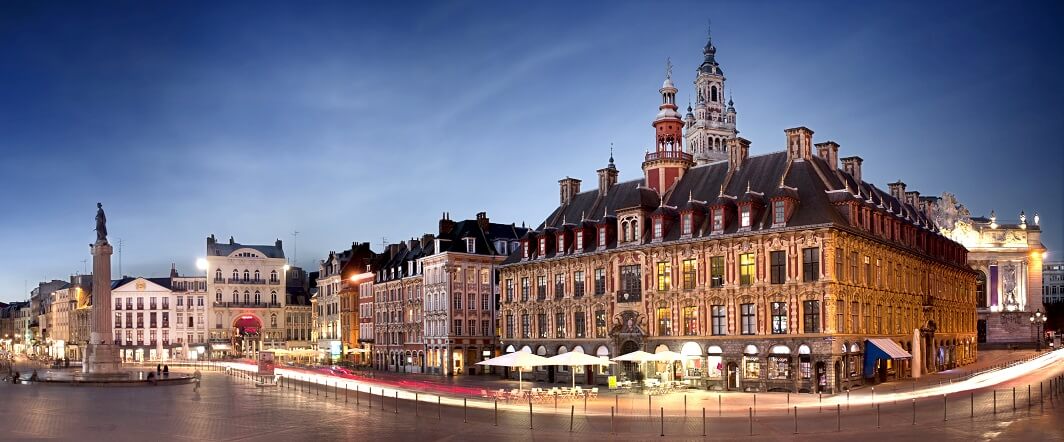
Lille is the main city of the Hauts-de-France region, located in the Nord department. With a population of over 230,000, Lille is the tenth most populous city in France. It is also the capital of French Flanders and of the former Nord-Pas-de-Calais region.Lille is a dynamic, cosmopolitan city with a wide variety of cultural and leisure activities to offer. It has a rich architectural heritage, with buildings in a range of styles, from Flamboyant Gothic to Art Deco. Its most famous landmarks include the Vieille Bourse, Notre-Dame de la Treille Cathedral, the Citadel of Lille, the Porte de Paris, the Palais Rameau and many more.
Lille is also known for its food, with local specialties such as the welsh, potjevleesch, carbonnade flamande and, of course, the famous moules-frites. The local markets offer a wide variety of fresh produce, such as cheeses, fruits and vegetables, wines and craft beers.
Lille is also a student city with several universities, grandes écoles and research institutes, making it fertile ground for innovation and creativity. The city is also an important economic center, with major activity in industry, retail and services.
Finally, Lille is very well connected, with fast and frequent rail links to Paris, London, Brussels and other European cities. The city also has a well-developed public transportation network, with metro, tram and bus lines that make getting around easy.
In short, Lille is a fascinating city with a rich and diverse heritage, delicious food, a student-friendly and innovative environment, a thriving economy and excellent accessibility. If you are looking for a dynamic and stimulating city to discover, Lille is definitely a destination not to be missed.