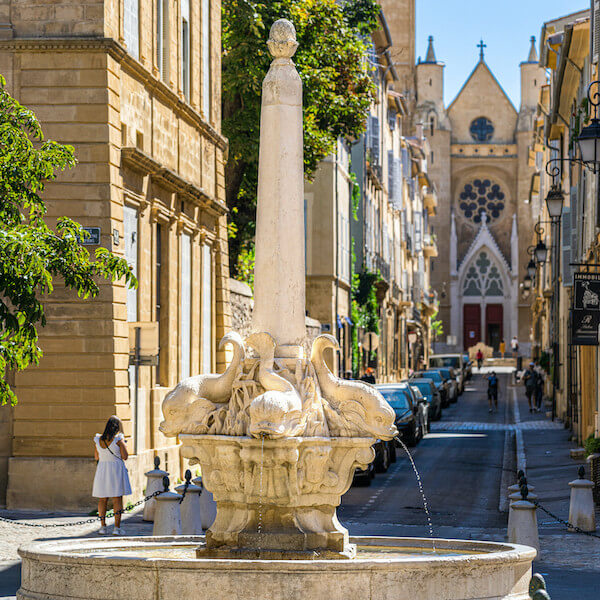
Aix-en-Provence Population and Area (Bouches-du-Rhône)
Largest city in France 2026: up-to-date figures for Aix-en-Provence (Bouches-du-Rhône)
Aix-en-Provence: Population and Area
With 152,854 inhabitants (INSEE total population in force on January 1, 2026), Aix-en-Provence is the 22nd most populous town in France in 2026 and the 2nd most populous in the Bouches-du-Rhône department, out of 119 communes. It covers 186 km² (49th largest area in France, 5th largest in the department), with a population density of 821 inhabitants per km², or 7.5 times the national average (110 inhabitants/km²), which ranks it 1,164th in France for density.
Aix-en-Provence is located in the Bouches-du-Rhône department (13), in the Provence-Alpes-Côte d'Azur region, where it ranks 4th by population out of 946 communes. The most populous town in the Bouches-du-Rhône department is Marseille (892,391 inhabitants); the department is home to 2,112,170 people over 5,087 km².
See the full ranking of communes in the Bouches-du-Rhône department and the regional ranking: largest city in Provence-Alpes-Côte d'Azur.
Towns of similar size in the Bouches-du-Rhône department: Marseille (pop. 892,391), Arles (pop. 52,515), Martigues (pop. 48,807), Aubagne (pop. 47,920).
Sources: INSEE, official population figures in force on January 1, 2026 (total population); areas: IGN / Observatoire des territoires; INSEE code 13001. Rankings are calculated across the 34,858 communes of metropolitan and overseas France in our database.
Aix-en-Provence, a major city of the Aix-Marseille-Provence metropolis
Though merely a subprefecture of the Bouches-du-Rhône, Aix-en-Provence is nonetheless the department's second-largest town, far behind Marseille, with which it forms the Aix-Marseille-Provence metropolis. The former capital of Provence, home to a university since 1409 and to the court of appeal, it has kept an intellectual and judicial role that its size alone would not explain.
Larger than Paris, far less populated
The commune of Aix-en-Provence is one of the most extensive in mainland France: its territory takes in hills, countryside and the Montagne Sainte-Victoire, and far exceeds that of Paris. Its density is therefore very low for a city of this rank. Its population has doubled since the 1960s with the arrival of students, of professionals from the Les Milles business park and the Cadarache nuclear research center, and of retirees drawn by the easy pace of Provençal life, making Aix one of the most expensive major cities in France.