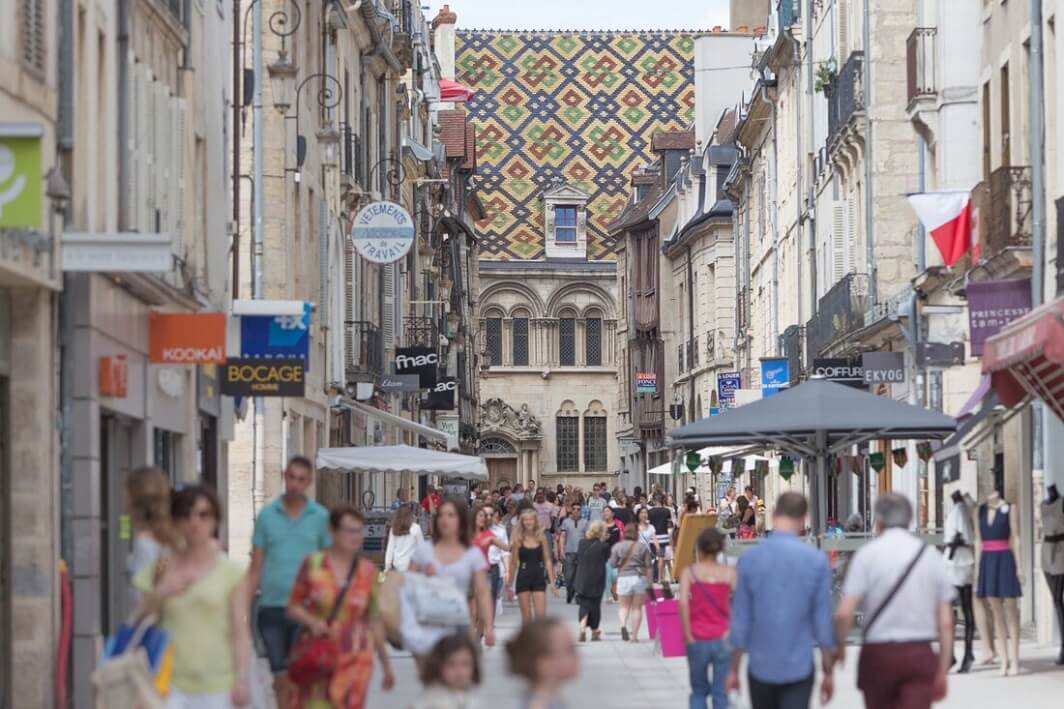
Dijon Population and Area (Côte-d'Or)
Largest city in France 2026: up-to-date figures for Dijon (Côte-d'Or)
Dijon: Population and Area
With 164,963 inhabitants (INSEE total population in force on January 1, 2026), Dijon is the 16th most populous town in France in 2026 and the most populous in the Côte-d'Or department, out of 698 communes. It covers 40 km² (2,027th largest area in France, 7th largest in the department), with a population density of 4,082 inhabitants per km², or 37 times the national average (110 inhabitants/km²), which ranks it 195th in France for density.
Dijon is located in the Côte-d'Or department (21), in the Bourgogne-Franche-Comté region (formerly Burgundy), where it ranks 1st by population out of 3,685 communes. It is the most populous town in the Côte-d'Or department, which is home to 551,336 people over 8,763 km².
See the full ranking of communes in the Côte-d'Or department and the regional ranking: largest city in Bourgogne-Franche-Comté.
Towns of similar size in the Côte-d'Or department: Beaune (pop. 20,999), Chenôve (pop. 14,415), Talant (pop. 12,075).
Sources: INSEE, official population figures in force on January 1, 2026 (total population); areas: IGN / Observatoire des territoires; INSEE code 21231. Rankings are calculated across the 34,858 communes of metropolitan and overseas France in our database.
Dijon, a major city on the Paris-Lyon axis
Capital of the Dukes of Burgundy and later of the Bourgogne-Franche-Comté region, Dijon is by far the largest city in the Côte-d'Or and the largest urban area in its region. Its position on the Paris-Lyon-Mediterranean axis, halfway between the two metropolises, made it a rail and administrative crossroads that concentrates the service-sector jobs of all of Burgundy.
A size driven by services and heritage
Unlike the industrial cities of eastern France, Dijon has not experienced any marked population decline: regional administrations, the university, and the pharmaceutical and food industries (mustard, blackcurrant, gingerbread) sustain a stable population. Its historic center, a World Heritage site together with the climats of the Burgundy vineyards, attracts urban tourism that complements its role as regional capital. The commune nevertheless remains compact, with most recent growth taking place in the towns of Dijon Métropole.