Identity card
- Department
- Rhône (69)
- Codes
- Postcode 69100 · INSEE 69266
- Rank in the department
- 2nd of 266
- Area
- 14.52 km²
- Coordinates
- 45° 46′ N · 4° 53′ E
- Elevation
- 169 m (town hall)
Population
Villeurbanne: Population and Area
With 164,747 inhabitants (official total population in force on January 1, 2026), Villeurbanne is the 17th most populous town in France in 2026 and the 2nd most populous in the Rhône department, out of 266 communes. It covers 15 km² (12,641st largest area in France, 80th largest in the department), with a population density of 11,346 inhabitants per km², or 103 times the national average (110 inhabitants/km²), which ranks it 35th in France for density.
Villeurbanne is located in the Rhône department (69), in the Auvergne-Rhône-Alpes region (formerly Rhône-Alpes), where it ranks 3rd by population out of 4,025 communes. The most populous town in the Rhône department is Lyon (525,314 inhabitants); the department is home to 1,940,015 people over 3,249 km².
See the full ranking of communes in the Rhône department and the regional ranking: largest city in Auvergne-Rhône-Alpes.
Towns of similar size in the Rhône department: Lyon (pop. 525,314), Vénissieux (pop. 65,689), Vaulx-en-Velin (pop. 53,281), Saint-Priest (pop. 49,498).
Sources: INSEE, official population figures in force on January 1, 2026 (total population); areas: IGN / Observatoire des territoires; INSEE code 69266. Rankings are calculated across the 34,875 communes of metropolitan and overseas France in our database.
Villeurbanne, one of the largest cities in France without being an administrative capital
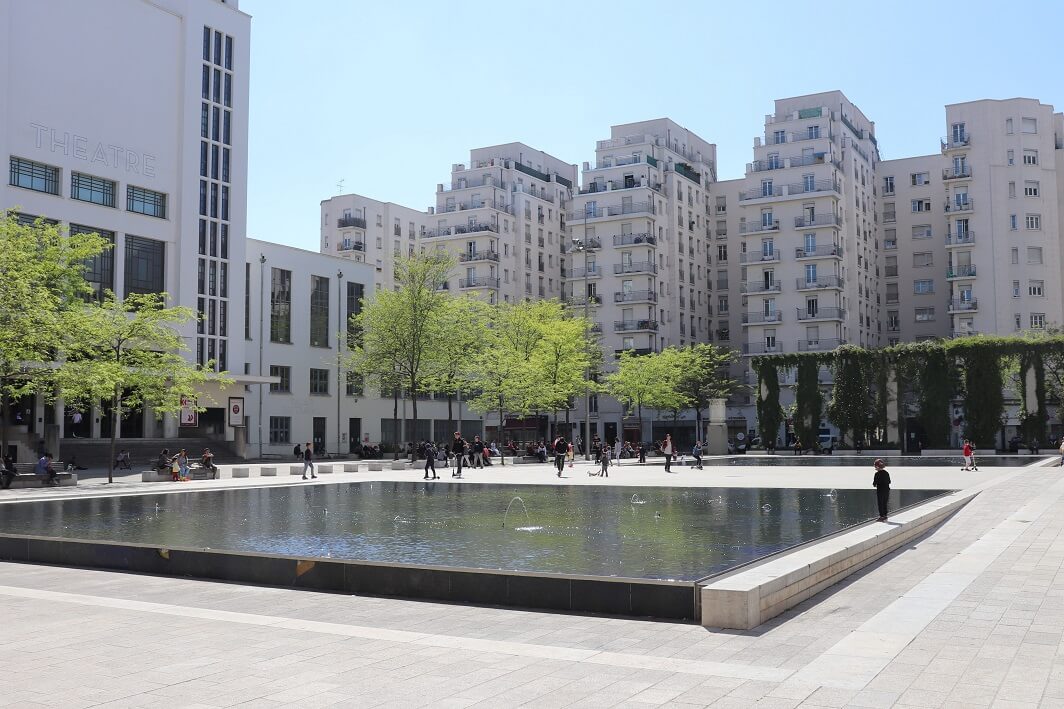
Villeurbanne is the most populous town in France that is neither a prefecture nor a subprefecture: it owes its size to its position in Lyon's inner ring, extending the urban fabric of Lyon without any break, on the left bank of the Rhône. Many visitors don't realize they have left Lyon when they walk from the Parc de la Tête-d'Or to the center of Villeurbanne.
A dense city, built to house the urban area
With its Gratte-Ciel district, built in the 1930s to provide modern housing for the workers of eastern Lyon, Villeurbanne chose height and density very early on. A university town with the La Doua campus, bordered by Vaulx-en-Velin and Bron, it keeps growing denser and ranks among the most densely populated towns in France outside Île-de-France. In the ranking, it is neck and neck with Dijon and Angers, prefecture cities that nonetheless have much larger territories.
Municipal population at the latest census: 163,684 inhabitants, +8.6% over five years and +11% over ten years. It has never been so populated since 1876.
Municipal population since 1876
Villeurbanne, Rhône and France since 1968
Index 100 in 1968
Municipal population at each census, current municipal boundaries; France excluding Mayotte. Source: INSEE, population censuses
Age of the inhabitants
Under-15s make up 16.4% of the population (France: 17.1%), people aged 65 and over 13.6% (France: 21.2%). Villeurbanne has about 82,351 households, with 1.95 people on average.
Births and deaths
Over the last 10 years (2016–2025), 23,389 births and 9,407 deaths of residents were recorded: a natural increase of +13,982.
Per year, by place of residence
Births Deaths
Births by mother’s place of residence, deaths by place of residence of the deceased. Sources: INSEE, population census, INSEE, civil registration
Housing
Property prices in Villeurbanne
Apartments sell for €3,806 per m² (median price over five years), with the average price up 1.4% over one year.
- Apartments
- 3,806€/m²
- Median price, 10,907 sales in 5 years
- Average price: +1.4% over one year
- Houses
- 4,505€/m²
- Median price, 547 sales in 5 years
- Average price: −1.7% over one year
- Apartment rent
- 15.6€/m²
- Per month, charges included
- House rent
- 15.7€/m²
- Per month, charges included
Within 15 km, 36 of the 64 towns with a published price are cheaper than Villeurbanne for an apartment.
| Town | Price per m² | Compared with Villeurbanne |
|---|---|---|
| Lyon 5 km | €4,768 | +25% |
| Caluire-et-Cuire 4 km | €4,056 | +7% |
| Sathonay-Camp 6 km | €3,952 | +4% |
| Villeurbanne | €3,806 | — |
| Décines-Charpieu 5 km | €3,425 | −10% |
| Bron 4 km | €3,017 | −21% |
| Vaulx-en-Velin 3 km | €2,870 | −25% |
Median sale prices over five years, published from 10 sales; advertised rents. Sources: DGFiP (DVF), Etalab processing, Ministry of Housing (rent map)
Housing stock
Villeurbanne has about 93,196 dwellings: 88.4% main residences, 3.5% second or occasional homes and 8.1% vacant dwellings. Apartments account for 92% of them.
- Owners
- 34.6% of households
- Rhône 48.4% · France 57.5%
- Social housing tenants
- 18.5% of households
- Rhône 17.2% · France 14.6%
- Second homes
- 3.5% of dwellings
- Rhône 3.6% · France 9.7%
- Vacant dwellings
- 8.1% of dwellings
- Rhône 7.8% · France 7.8%
- Social housing (SRU law)
- 31.0% of main residences (24,394 social rented dwellings), for a legal target of 25%.
- A/B/C zoning
- Zone AThe zoning ranks towns by housing market pressure, from A bis (highest) to C; it sets the ceilings of several housing schemes (zero-rate loan, intermediate rental housing…).
- High-pressure area
- YesUrban area where housing demand clearly exceeds supply: one-month notice for tenants of unfurnished homes, capped rent increases between tenants, tax on vacant dwellings.
- Priority neighborhoods
- 5 priority neighborhoods of urban policy (QPV), entirely or partly in the town
See the list
Bel Air - Les Brosses, Les Buers, Monod - Baratin - Cacard, Saint-Jean, Tonkin
Sources: INSEE, census, Ministry of Housing, SRU inventory, Ministry of Housing, A/B/C zoning, Service-public.fr, ANCT
Vacant private housing
The vacant housing file lists 3,813 vacant homes in the private housing stock, or 5.3% of its 72,140 homes. 1,501 of them have been vacant for more than two years (2.1% of private housing).
Built from tax data, this file counts privately owned homes that were empty on January 1, including between two tenants or during renovation work: vacancy of more than two years better reflects homes left empty for the long term. Social housing is not included.
Income
Income in Villeurbanne
Half of the inhabitants have a standard of living above €24,160 a year (disposable income per consumption unit), 7% below the figure for metropolitan France.
- Poverty rate
- 23.1%
- Rhône 16.3% · Metropolitan France 15.9%
- Average taxable income
- 26,493€/household
- Rhône €36,792 · France €33,086
- Taxed households
- 47%
- Rhône 53% · France 47%
- Tax households
- 104,269
- Income tax returns
Average reference taxable income per tax household; department and France: all households of the published towns. Sources: INSEE, Filosofi, DGFiP, income tax by town
Employment
Employment in Villeurbanne
Census-based unemployment rate: 13.0% of the labor force aged 15 to 64 say they are unemployed (Rhône: 10.6%, France: 11.4%). The activity rate (people in work or looking for work among those aged 15 to 64) is 73.3% (France: 75.6%).
Census-based unemployment relies on what respondents declare: it differs from the quarterly ILO unemployment rate, published for France and for employment zones.
Department and France (excl. Mayotte): computed from all towns. Source: INSEE, population census
Private-sector salaries
Private-sector employees who work in Villeurbanne earn an average of €2,835 net a month in full-time equivalent: €2,579 for women and €3,022 for men.
This is the salary by place of work, not by place of residence: it describes the jobs located in the town, which are also held by people living in nearby towns. Full-time equivalent converts each job to a full-time position over the whole year.
Source: INSEE, all-employees database
Businesses
Businesses and establishments in Villeurbanne
INSEE lists 15,559 active establishments in Villeurbanne, excluding farming, and 13,947 businesses (legal units) have their head office there. The number of establishments has risen by 16% over 4 years.
Active establishments on December 31, market and non-market activities excluding farming; France: all towns. Source: INSEE, business demography information system (SIDE)
Education
Schools in Villeurbanne
Villeurbanne has 60 primary schools (10 private), 19 middle schools (7 private) and 10 high schools (4 private).
- Primary schools
- 60
- 50 public · 10 private
- Middle schools
- 19
- 12 public · 7 private
- High schools
- 10
- 6 public · 4 private
- Higher education
- 26
- Institutions and programs
Social position index of students
The social position index (IPS), calculated by the French Ministry of Education, sums up the social background of students’ families based on their parents’ occupations: the higher it is, the more advantaged the students are on average. It measures neither student achievement nor the quality of teaching.
| Average IPS | Villeurbanne | Department | France |
|---|---|---|---|
| Middle schools 13 schools | 97.5from 71.8 to 130.8 | 110.7 | 105.1 |
| High schools 8 schools | 99.9from 78.6 to 132.1 | 112.8 | 108.0 |
IPS: simple average of public and state-contracted private schools, with the lowest and highest in small type; department and France: average of their schools. Sources: Ministry of Education, school directory, INSEE, facilities database, Ministry of Education (DEPP), IPS
Exam results
84.8% of the 1,573 candidates from the town’s 13 middle schools passed the brevet (the national exam at the end of middle school) at the latest session (Rhône: 89.6%; France: 86.4%).
Show the results of the 13 middle schools
| Middle school (collège) | Candidates | Pass rate | Value added |
|---|---|---|---|
| Collège des Gratte-Ciel Morice Leroux public | 161 | 75.9% | −4 |
| Collège du Cinema - Bertrand Tavernier public | 99 | 91.3% | +7 |
| Collège Gilbert Chabroux public | 119 | 85.4% | +12 |
| Collège Jean Jaurès public | 143 | 68.9% | −7 |
| Collège Jean Mace public | 144 | 88.0% | +9 |
| Collège Lamartine public | 112 | 82.6% | +14 |
| Collège Les Iris public | 108 | 89.8% | +12 |
| Collège Louis Jouvet public | 158 | 86.0% | +5 |
| Collège privé Beth Menahem | 22 | 91.0% | — |
| Collège privé Immaculée Conception | 190 | 96.0% | −1 |
| Collège privé Juif de Lyon | 49 | 98.0% | +5 |
| Collège privé Mere Teresa | 130 | 93.4% | +1 |
| Collège Simone Lagrange public | 138 | 70.3% | +3 |
90.9% of the 868 candidates from the town’s 4 high schools passed the general and technological baccalaureate at the latest session (Rhône: 94.2%; France: 95.5%).
| High school (lycée) | Candidates | Pass rate | Value added |
|---|---|---|---|
| Lycée Frédéric Fays (général et techno.) public | 364 | 87% | −2 |
| Lycée Gilberte et Pierre Brossolette public | 320 | 90% | −3 |
| Lycée Immaculée Conception private | 146 | 100% | +1 |
| Lycée Juif de Lyon private | 38 | 100% | — |
77.3% of the 387 candidates from the town’s 5 high schools passed the vocational baccalaureate at the latest session (Rhône: 82.1%; France: 83.4%).
Show the results of the 5 high schools
| High school (lycée) | Candidates | Pass rate | Value added |
|---|---|---|---|
| Cité scolaire René Pellet public | 25 | 84% | −1 |
| Lycée Frédéric Fays (professionnel) public | 47 | 74% | +5 |
| Lycée professionnel Alfred de Musset public | 80 | 68% | −3 |
| Lycée professionnel Magenta public | 117 | 86% | +10 |
| Lycée professionnel Marie Curie public | 118 | 75% | −10 |
Value added, calculated by the French Ministry of Education, compares a school’s pass rate with the rate that could be expected given its students (age, social background, previous academic level): +3 means three percentage points above that expected rate; −3, three points below. It is not published for schools with too few students.
Pass rates of candidates who sat the exam; town, department and France averages weighted by the number of candidates. Source: Ministry of Education (DEPP), value-added indicators
Health
Healthcare in Villeurbanne
Access to general practitioners: 3.9 consultations a year per inhabitant (Rhône: 4.0, France: 3.7).
Localised potential accessibility (APL), computed by DREES, measures the healthcare supply within reach of residents: it takes into account professionals in the town and nearby towns, their activity and the age of the population.
| Access (APL) | Villeurbanne | Department | France |
|---|---|---|---|
| Nurses | 157 | 155 | 154 |
| Physiotherapists | 173 | 156 | 124 |
| Dentists | 89 | 75 | 62 |
| Midwives | 24 | 30 | 22 |
Full-time equivalents within reach per 100,000 inhabitants (per 100,000 women for midwives).
- General practitioners
- 142
- in private practice, in the town
- Pharmacies
- 38
- dispensing pharmacies
- Hospital sites
- 5
- hospitals and clinics, per site
- Ehpad
- 6
- care homes for the elderly
Department and France: average of all towns weighted by population. Sources: DREES, localised potential accessibility, Ministry of Health, FINESS, INSEE, facilities database
Tap water
Tap water testing in Villeurbanne
Over the last twelve months, the regional health agency took 927 samples from the water networks serving Villeurbanne: 100% met the bacteriological quality limits, and 100% the physical and chemical limits. Latest sample: September 30, 2026, compliant.
A non-compliant result means that one sample exceeded a quality limit; on its own, it does not mean the water is unfit to drink. When it is, the regional health agency and the town hall inform residents. For a town served by several networks, the samples from all of them are combined.
Samples assessed over the last twelve months. Source: Ministry of Health, tap water monitoring
Facilities
Shops and facilities in Villeurbanne
INSEE lists 6,023 shops, services and facilities in Villeurbanne, or 37 per 1,000 inhabitants.
- 620Shops
- 97Bakeries
- 18Supermarkets
- 565Restaurants
- 6Hotels
- 164Sports facilities
- 13Cultural venues
- 10Public services
- 13Post offices
None listed among: railway stations.
Establishments in the town; cultural venues: cinemas, libraries, music schools… Source: INSEE, permanent facilities database
Tourism
Hotels and campgrounds in Villeurbanne
Villeurbanne has 6 hotels (578 rooms) and 1 other group accommodation facility (220 beds). That makes 0.4 hotel rooms and campsites per 100 inhabitants (Rhône: 1.0; France: 2.2).
- Hotels
- 6
- 1 rated 4 or 5 stars
- Hotel rooms
- 578
- Other group accommodation
- 1
- 220 beds
Other group accommodation: 1 tourist residence.
Establishments open on January 1, rated or not; France: official total population of all towns. Source: INSEE, tourist accommodation capacity of communes
Heritage
Historic monuments in Villeurbanne
Villeurbanne has 3 historic monuments, including 3 registered.
- Hôtel de villePartly registered · 20th century
- Villa dite Villa LafontRegistered · 20th century
- Monument aux mortsRegistered · 20th century
A classified monument (classé, the highest level of protection) is of public interest from a historical or artistic point of view; a registered monument (inscrit) is of enough interest to make its preservation desirable. Protection may cover only part of a building (facades, roofs, interior decoration).
Buildings protected as historic monuments; a monument that spans several towns counts in each of them. Source: Ministry of Culture, Mérimée database
Safety
Recorded crime in Villeurbanne
Over the latest year published, the police and gendarmerie recorded 522 residential burglaries in Villeurbanne, i.e. 5.7 per 1,000 dwellings (Rhône: 7.3, France: 5.6).
| Per 1,000 inhabitants | Villeurbanne | Department | France | Since 2016 |
|---|---|---|---|---|
| Residential burglaries per 1,000 dwellings | 5.7 | 7.3 | 5.6 | −42% |
| Non-violent thefts from persons | 18 | 17 | 9.1 | +24% |
| Physical violence outside the family | 3.8 | 3.8 | 3.2 | +12% |
| Domestic physical violence | 3.6 | 3.1 | 3.8 | +75% |
| Vehicle thefts | 2.8 | 2.9 | 1.8 | −31% |
| Criminal damage | 15 | 9.7 | 7.9 | +36% |
Other indicators (8)
| Per 1,000 inhabitants | Villeurbanne | Department | France | Since 2016 |
|---|---|---|---|---|
| Sexual violence | 1.7 | 1.8 | 1.9 | +193% |
| Thefts from vehicles | 10 | 11 | 3.4 | +9% |
| Thefts of vehicle parts | 2.1 | 2.6 | 1.4 | +7% |
| Violent thefts without a weapon | 3.3 | 2.5 | 0.7 | +40% |
| Armed robberies | 0.3 | 0.2 | 0.1 | +27% |
| Fraud and payment fraud | 9.2 | 8.6 | 6.5 | +72% |
| Drug use | 9.5 | 5.9 | 4.5 | +199% |
| Drug trafficking | 2.8 | 1.0 | 0.8 | +271% |
These figures count offenses recorded by the police and gendarmerie in the town where they were reported. They do not measure all crime (some victims do not file a complaint) and also depend on police activity; their trend partly follows that of complaints, which have risen in recent years for domestic and sexual violence. A town that receives many visitors (shopping centre, station, tourism) has higher rates, since they are divided by its residents only. “Not released”: numbers too small, withheld by the Ministry of the Interior’s statistical service.
Victims, offenses, vehicles or suspects depending on the indicator, as published by SSMSI. Source: Ministry of the Interior (SSMSI)
Climate
Climate in Villeurbanne
Average annual temperature: 13.0°C, with 42 frost days and 31 days at 30°C or more a year on average.
- Average temperature
- 13.0°C
- Lows 8.6°C, highs 17.5°C
- Rainfall
- 821mm a year
- 103 rainy days (1 mm or more)
- Sunshine
- 2,050hours a year
- Frost days
- 42a year
- Low of 0°C or below
- Hot days
- 31a year
- High of 30°C or above
Month by month
Average lows and highs Rain (mm)
30-year climate normals of the Lyon-Bron weather station, 7 km away. Source: Météo-France
Risks
Natural and technological risks in Villeurbanne
Since 1982, the state of natural disaster has been recognized 12 times in Villeurbanne, most recently for an event that began on June 23, 2021.
- Recognised disasters
- Prevention plans
- 1 natural risk prevention plan in force (it covering flooding)
- Major risks listed
- Departmental major risks file (prefecture)
- Radon potential
- Lowcategory 1 of 3
Address-level details (flood zones, clay shrink-swell, industrial sites…) are given by Géorisques, the official public website.
Recognitions per event and type of hazard, since 1982. Sources: Ministry for the Ecological Transition, Géorisques, ASNR
Finances
Town debt and taxes in Villeurbanne
At the end of the latest fiscal year published, the town’s debt stood at €687 per inhabitant, or €112 million in total; towns of similar size carry an average debt of €1,149 per inhabitant. Local taxes bring in €759 per inhabitant.
| Euros per inhabitant | Villeurbanne | Similar size | Department | France |
|---|---|---|---|---|
| Debt (outstanding on December 31) | 687 | 1,149 | 708 | 993 |
| Local taxes | 759 | 820 | 715 | 639 |
| Capital spending | 478 | 393 | 427 | 463 |
| Operating expenses | 1,070 | 1,493 | — | — |
| Operating revenue | 1,235 | 1,619 | — | — |
Main budget of the town, with amounts divided by the population used by the DGFiP (the DGF population). Local taxes are those the town itself collects, mainly property taxes and the residence tax on second homes; taxes collected by the intercommunality are not included. Capital spending can be exceptional in a given year.
Similar size: average of the population band published by the DGFiP; department and France: total of all towns’ amounts divided by their total population. Source: DGFiP (French public finance directorate), individual accounts of communes
Elections
Election results in Villeurbanne
In the second round of the 2022 presidential election, 65.2% of registered voters in Villeurbanne cast a ballot (France: 73.3%); Emmanuel Macron came first in the town with 76.0% of the valid votes.
| Election | Turnout | Department | France | First place in the town |
|---|---|---|---|---|
| 2022 presidential, 1st roundFirst: Jean-Luc Mélenchon, 37.9% | 72.3% | 78.4% | 75.3% | Jean-Luc Mélenchon 37.9% |
| 2022 presidential, 2nd roundFirst: Emmanuel Macron, 76.0% | 65.2% | 73.3% | 73.3% | Emmanuel Macron 76.0% |
| 2024 legislative, 1st roundFirst: Union of the Left (Union de la gauche), 46.2% | 64.4% | 71.6% | 67.9% | Union of the Left (Union de la gauche) 46.2% |
| 2024 EuropeanFirst: France Unbowed (La France insoumise), 25.2% | 51.5% | 57.5% | 53.0% | France Unbowed (La France insoumise) 25.2% |
Turnout: voters as a share of those registered on the town’s electoral rolls. Score: share of the valid votes in the town (all ballots except blank and spoiled ones), which may differ from the national result. Legislative elections: candidates’ votes added up by nuance label, as a town can span several constituencies. Legislative candidates and European lists are shown under the political label assigned by the French Ministry of the Interior, which may differ from the label the candidates chose; it is translated into English, followed by the official French label the first time it appears. France: all towns, excluding French citizens voting abroad.
Local life
Town hall and mayor of Villeurbanne
- Mayor
- Cédric Van Styvendael, elected mayor on March 28, 2026 Political label of his list in March 2026, as classified by the Ministry of the Interior: Union of the Left
- Town hall address
- Place du Docteur-Lazare-Goujon, BP 65051, 69601 Villeurbanne Cedex
- Phone
- 04 78 03 67 67
- Opening hours
- Monday to Wednesday 9 a.m. – 5 p.m.
- Thursday 1 p.m. – 7 p.m.
- Friday 9 a.m. – 5 p.m.
- Fibre broadband
- 94% of homes and business premises can get fibre (FTTH)
- Property tax
- Overall rate on built property: 34.32% (average of the towns in Rhône: 32.93%)
Sources: Ministry of the Interior, DILA, Service-public.fr, Arcep, DGFiP
Land
14.52 km² in Rhône
- Area
- 14.52 km² · 12,641st in France · 80th in the department
- Density
- 11,346 per km² · 35th in France · 1st in the department
- French average
- 110 per km²
- Share of Rhône
- 0.4% of the area, 8.5% of the inhabitants
- Inter-municipal authority
- Métropole de Lyon 58 towns
- Urban unit
- Lyon 123 towns
- Catchment area
- Lyon 397 towns
- Density level
- Large urban center level 1 of 7 (INSEE)
- Town hall elevation
- 169 m
Sources: IGN, INSEE, geographic classifications, INSEE, density grid, IGN, elevation
Rankings
Villeurbanne in the rankings
Compare
Compare Villeurbanne with…
- Villeurbanne vs Paris2,119,412 inhab.
- Villeurbanne vs Marseille892,391 inhab.
- Villeurbanne vs Lyon525,314 inhab.
- Villeurbanne vs Toulouse519,940 inhab.
- Villeurbanne vs Nice360,710 inhab.
- Villeurbanne vs Nantes332,515 inhab.
- Villeurbanne vs Montpellier313,712 inhab.
- Villeurbanne vs Strasbourg296,552 inhab.
- Villeurbanne vs Bordeaux271,552 inhab.
- Villeurbanne vs Lille240,109 inhab.
- Villeurbanne vs Rennes234,950 inhab.
- Villeurbanne vs Toulon180,774 inhab.
- Villeurbanne vs Reims180,733 inhab.
- Villeurbanne vs Saint-Étienne174,698 inhab.
- Villeurbanne vs Le Havre168,588 inhab.
- Villeurbanne vs Dijon164,963 inhab.
- Villeurbanne vs Angers162,290 inhab.
- Villeurbanne vs Grenoble158,303 inhab.
- Villeurbanne vs Saint-Denis (974)157,142 inhab.
- Villeurbanne vs Vénissieux65,689 inhab.
- Villeurbanne vs Vaulx-en-Velin53,281 inhab.
- Villeurbanne vs Saint-Priest (69)49,498 inhab.
- Villeurbanne vs Caluire-et-Cuire44,139 inhab.
- Villeurbanne vs Bron43,369 inhab.
- Villeurbanne vs Décines-Charpieu30,064 inhab.
Map
Things to do in Villeurbanne
Weather
What's the weather like in Villeurbanne?
Frequently asked questions
Villeurbanne in 16 questions
What is the population of Villeurbanne in 2026?
Villeurbanne has 164,747 inhabitants (official total population in force on January 1, 2026). It ranks 17th in France by population.
What is the area of Villeurbanne?
14.52 km², 12,641st in France, for a density of 11,346 inhabitants per km².
Which department is Villeurbanne in?
Rhône (69), in the Auvergne-Rhône-Alpes region. INSEE code: 69266; postcode: 69100.
Is the population of Villeurbanne growing?
Yes: Villeurbanne had 163,684 inhabitants (municipal population) at the latest census, 16,492 more than ten years earlier (+11%).
What is the postcode of Villeurbanne?
The postcode of Villeurbanne is 69100.
Who is the mayor of Villeurbanne?
Cédric Van Styvendael, elected mayor on March 28, 2026. His list in the March 2026 municipal elections is classified as “Union of the Left” by the Ministry of the Interior.
What is the price per m² in Villeurbanne?
€3,806 for an apartment and €4,505 for a house: median prices per m² of sales over the last five years (DGFiP, DVF).
How many schools are there in Villeurbanne?
Villeurbanne has 60 primary schools (nursery and elementary), 10 of them private. It also has 19 collèges and 10 lycées, public and private.
How many doctors are there in Villeurbanne?
142 general practitioners have a private practice in Villeurbanne. Taking nearby towns into account, residents have access to 3.9 GP consultations a year each (France: 3.7), according to DREES.
What is the unemployment rate in Villeurbanne?
According to the INSEE census, 13.0% of the labor force aged 15 to 64 in Villeurbanne say they are unemployed (France: 11.4%). This self-reported rate differs from the quarterly ILO unemployment rate.
What is the climate like in Villeurbanne?
According to Météo-France 30-year normals (Lyon-Bron station, 7 km away): an average annual temperature of 13.0°C (average lows 8.6°C, highs 17.5°C), 821 mm of rain a year, 2,050 hours of sunshine, 42 frost days and 31 days at 30°C or more.
How much social housing is there in Villeurbanne?
24,394 social rented dwellings, i.e. 31.0% of main residences (SRU inventory), for a legal target of 25%.
Who came first in the 2022 presidential election in Villeurbanne?
In the second round, Emmanuel Macron (76.0%); in the first round, Jean-Luc Mélenchon (37.9%), as a share of the valid votes in the town (French Ministry of the Interior).
How much debt does Villeurbanne have?
The town’s outstanding debt amounts to €687 per inhabitant (€112 million in total) at the end of the latest fiscal year published by the DGFiP, the French public finance directorate; towns of similar size average €1,149 of debt per inhabitant.
How many historic monuments are there in Villeurbanne?
Villeurbanne has 3 historic monuments, including 3 registered.
What is the brevet pass rate in Villeurbanne?
84.8% of the 1,573 candidates from the town’s 13 middle schools passed the brevet, the national exam at the end of middle school, at the latest session (department: 89.6%, France: 86.4%), according to the French Ministry of Education.