Le Mans Population and Area (Sarthe)
Largest city in France 2026: up-to-date figures for Le Mans (Sarthe)
Le Mans: Population and Area
With 148,876 inhabitants (INSEE total population in force on January 1, 2026), Le Mans is the 24th most populous town in France in 2026 and the most populous in the Sarthe department, out of 352 communes. It covers 53 km² (1,031st largest area in France, 8th largest in the department), with a population density of 2,819 inhabitants per km², or 26 times the national average (110 inhabitants/km²), which ranks it 318th in France for density.
Le Mans is located in the Sarthe department (72), in the Pays de la Loire region, where it ranks 3rd by population out of 1,228 communes. It is the most populous town in the Sarthe department, which is home to 579,227 people over 6,206 km².
See the full ranking of communes in the Sarthe department and the regional ranking: largest city in Pays de la Loire.
Towns of similar size in the Sarthe department: La Flèche (pop. 15,884), Sablé-sur-Sarthe (pop. 12,850), Allonnes (pop. 10,846).
Sources: INSEE, official population figures in force on January 1, 2026 (total population); areas: IGN / Observatoire des territoires; INSEE code 72181. Rankings are calculated across the 34,858 communes of metropolitan and overseas France in our database.
Le Mans, a major city in the Pays de la Loire
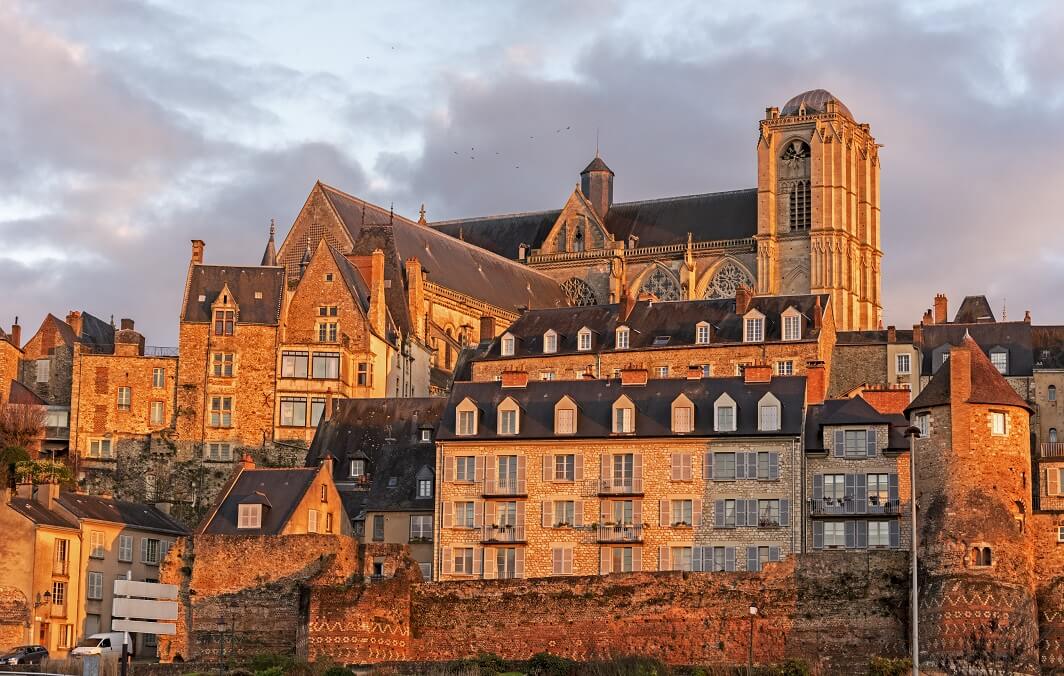
The prefecture of the Sarthe department, Le Mans is the third-largest city in the Pays de la Loire region, behind Nantes and Angers. The former capital of the Maine province, it grew up where the Sarthe and Huisne rivers meet, behind the largest surviving Gallo-Roman city wall after that of Rome, whose color earned it the nickname of the "red city."
A crossroads and an industrial city
The size of Le Mans stems from its position as a rail hub between Paris and Brittany, from insurance, with the headquarters of MMA, and from the automotive industry, of which the city is one of the birthplaces: the first French Grand Prix in 1906, a Renault plant and, of course, the 24 Hours, which every June draws more spectators than the city has residents. The commune is fairly compact, and its population, stable since the 1970s, is complemented by suburbs that account for most of the urban area's growth.