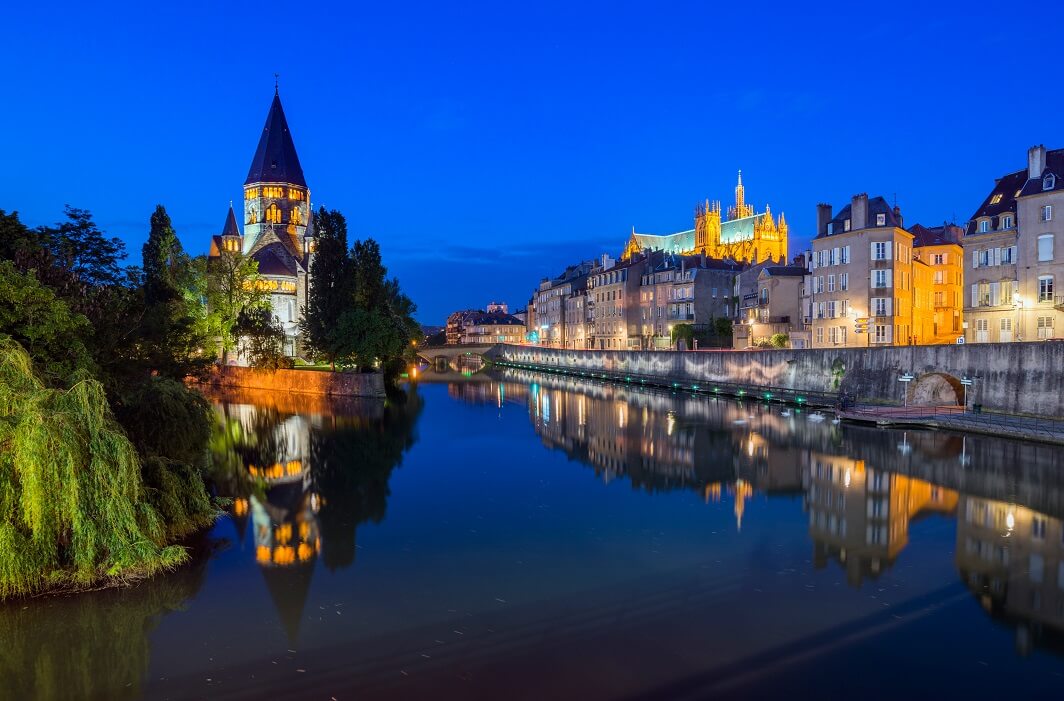
Metz Population and Area (Moselle)
Largest city in France 2026: up-to-date figures for Metz (Moselle)
Metz: Population and Area
With 124,396 inhabitants (INSEE total population in force on January 1, 2026), Metz is the 31st most populous town in France in 2026 and the most populous in the Moselle department, out of 725 communes. It covers 42 km² (1,827th largest area in France, 5th largest in the department), with a population density of 2,966 inhabitants per km², or 27 times the national average (110 inhabitants/km²), which ranks it 294th in France for density.
Metz is located in the Moselle department (57), in the Grand Est region (formerly Lorraine), where it ranks 3rd by population out of 5,115 communes. It is the most populous town in the Moselle department, which is home to 1,068,899 people over 6,216 km².
See the full ranking of communes in the Moselle department and the regional ranking: largest city in Grand Est.
Towns of similar size in the Moselle department: Thionville (pop. 43,398), Montigny-lès-Metz (pop. 22,065), Forbach (pop. 20,721).
Sources: INSEE, official population figures in force on January 1, 2026 (total population); areas: IGN / Observatoire des territoires; INSEE code 57463. Rankings are calculated across the 34,858 communes of metropolitan and overseas France in our database.
Metz, the largest city in Lorraine
The prefecture of the Moselle department, Metz is the most populous town in Lorraine, ahead of Nancy, and the third in the Grand Est region, behind Strasbourg and Reims. Capital of the Frankish kingdom of Austrasia in the 6th century, then a French and later a German stronghold, it grew up where the Moselle and the Seille rivers meet, on the border of three countries.
A size inherited from garrisons and borders
For more than a century, Metz was one of the largest garrison towns in Europe, which explains the scale of its German Imperial Quarter and its barracks. The departure of the regiments and the crisis in the Lorraine steel industry caused its population to decline until the 2000s; the city has since reinvented itself around the Centre Pompidou-Metz, the Technopôle, the University of Lorraine and cross-border jobs in Luxembourg, which attract new residents throughout the Moselle valley. The commune, large and very green, keeps a moderate density.