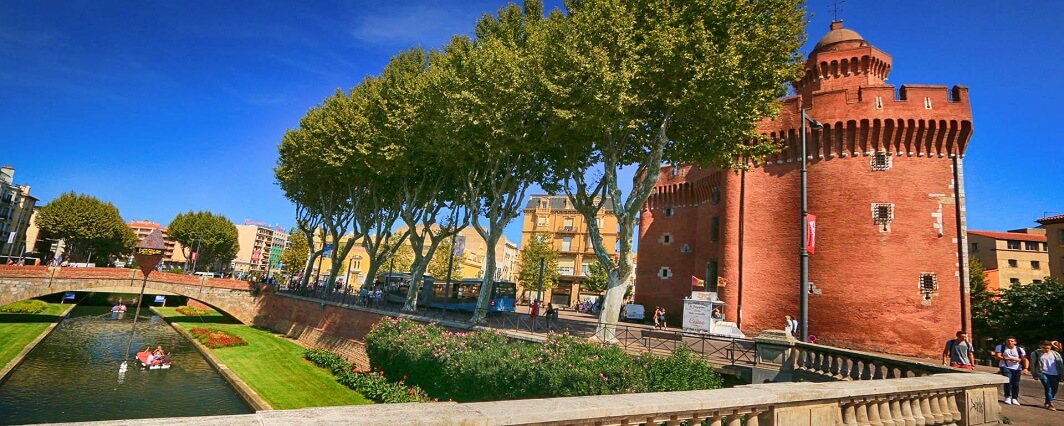
Perpignan Population and Area (Pyrénées-Orientales)
Largest city in France 2026: up-to-date figures for Perpignan (Pyrénées-Orientales)
Perpignan: Population and Area
With 123,136 inhabitants (INSEE total population in force on January 1, 2026), Perpignan is the 32nd most populous town in France in 2026 and the most populous in the Pyrénées-Orientales department, out of 226 communes. It covers 68 km² (581st largest area in France, 5th largest in the department), with a population density of 1,809 inhabitants per km², or 17 times the national average (110 inhabitants/km²), which ranks it 501st in France for density.
Perpignan is located in the Pyrénées-Orientales department (66), in the Occitanie region (formerly Languedoc-Roussillon), where it ranks 4th by population out of 4,446 communes. It is the most populous town in the Pyrénées-Orientales department, which is home to 504,938 people over 4,116 km².
See the full ranking of communes in the Pyrénées-Orientales department and the regional ranking: largest city in Occitanie.
Towns of similar size in the Pyrénées-Orientales department: Canet-en-Roussillon (pop. 13,460), Saint-Cyprien (pop. 12,210), Saint-Estève (pop. 11,798).
Sources: INSEE, official population figures in force on January 1, 2026 (total population); areas: IGN / Observatoire des territoires; INSEE code 66136. Rankings are calculated across the 34,858 communes of metropolitan and overseas France in our database.
Perpignan, a major Catalan city
Capital of the Pyrénées-Orientales department and the fourth-largest city in Occitanie after Toulouse, Montpellier and Nîmes, Perpignan is the leading city of French Catalonia. Once the mainland capital of the Kingdom of Majorca, it has only been French since 1659 and keeps a strong Catalan identity, right down to its name, Perpinyà.
Growth fueled by the sun
Like the other large cities on the Mediterranean coast, Perpignan has seen its population grow strongly since the 1960s, first with the arrival of repatriates from Algeria, then with retirees and families drawn by the climate and by the nearby sea and Pyrenees. In a department where most towns are small, the city is home to a considerable share of the people of the Pyrénées-Orientales. Its territory, spread across the Roussillon plain and crossed by the Têt river, gives it an average density for a city of its rank, with a dense historic center and sprawling neighborhoods of single-family homes.